

Basic Giant Schnauzer Grooming Guide
Keeping Your Giant in Shape
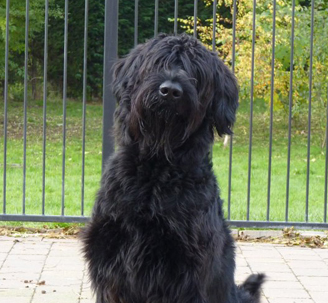
Giant Schnauzers are a ‘trimmed breed’ with minimal shedding, requiring regular attention either by hand-stripping, to remove dead coat, or clipping. To keep a Giant Schnauzer with their typical Schnauzery look and expression they will need a visit to a groomer approximately every 8-12 weeks. Alternatively you may wish to learn how to groom yourself. Without grooming a Giant will begin to resemble a shaggy bear.
A Giant Schnauzer overdue grooming
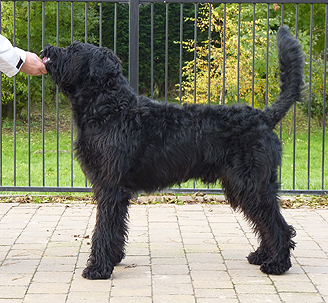
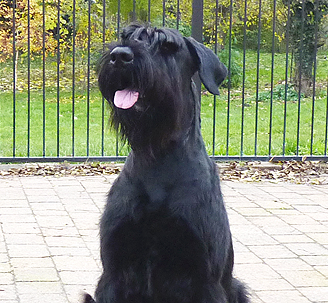
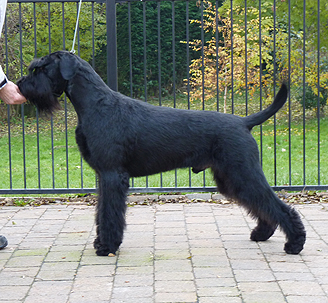
After stripping and trimming
Grooming a dog yourself can help establish a bond and also reinforces that ‘you’ are the leader of the pack, you may also find it rewarding and relaxing once the dog is used to being groomed. It may seem a little daunting at first but with a little practice you can soon master the basic techniques and keep your giant looking like a dog of distinction. Here are some basic instructions for you to follow, one thing for you to remember… if you make a mistake it will grow back!.. so have a go.. you have nothing to lose and everything to gain.
Clip or Strip
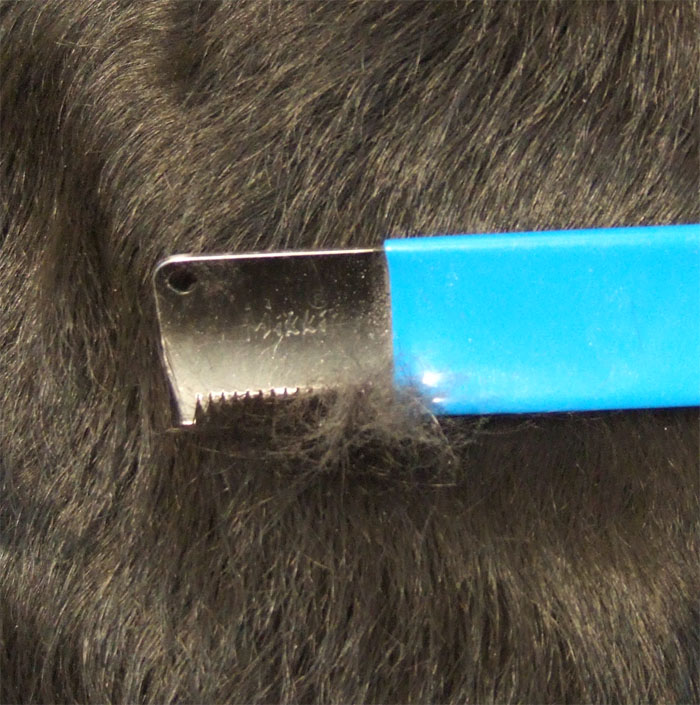 Giant Schnauzers have a double coat, a waterproof course top coat and a downy undercoat. Depending on coat type, when left the coat will become ‘blown’ once or twice a year. The longer dead top coat becomes loose, and puffed out with new coat and undercoat coming in underneath. Stripping of the coat can be a little more time consuming but maintains texture and keeps the coat weatherproof. The process of stripping involves removing dead hair by hand, or with the aid of a stripping knife, or de-shedding tool. Once stripped the faster growing undercoat can be maintained by scrapping through (carding) with the stripping knife. The frequency of carding will depend on the abundance and growth rate of the undercoat, for a harsh coat minimal carding is required, however a soft coat may require carding as much as once a week.
If you are not able to strip the body coat, and if your dog is not being shown, many groomers clip off the coat as it is quicker. However clipping the ‘body coat’ may cause the coat to lose texture and become softer and also may become duller with time. This is because individual hairs grow thinner from the root and thicker towards the tip, cutting the hairs prevents the tapering and thickening of the hair that would provide a courser texture. Also clipping does not remove undercoat and the overall coat may appear duller, sometimes a greyer colour or a reddish tinge.
Body Coat
1. Brush the coat regularly and thoroughly before trimming or hand-stripping.
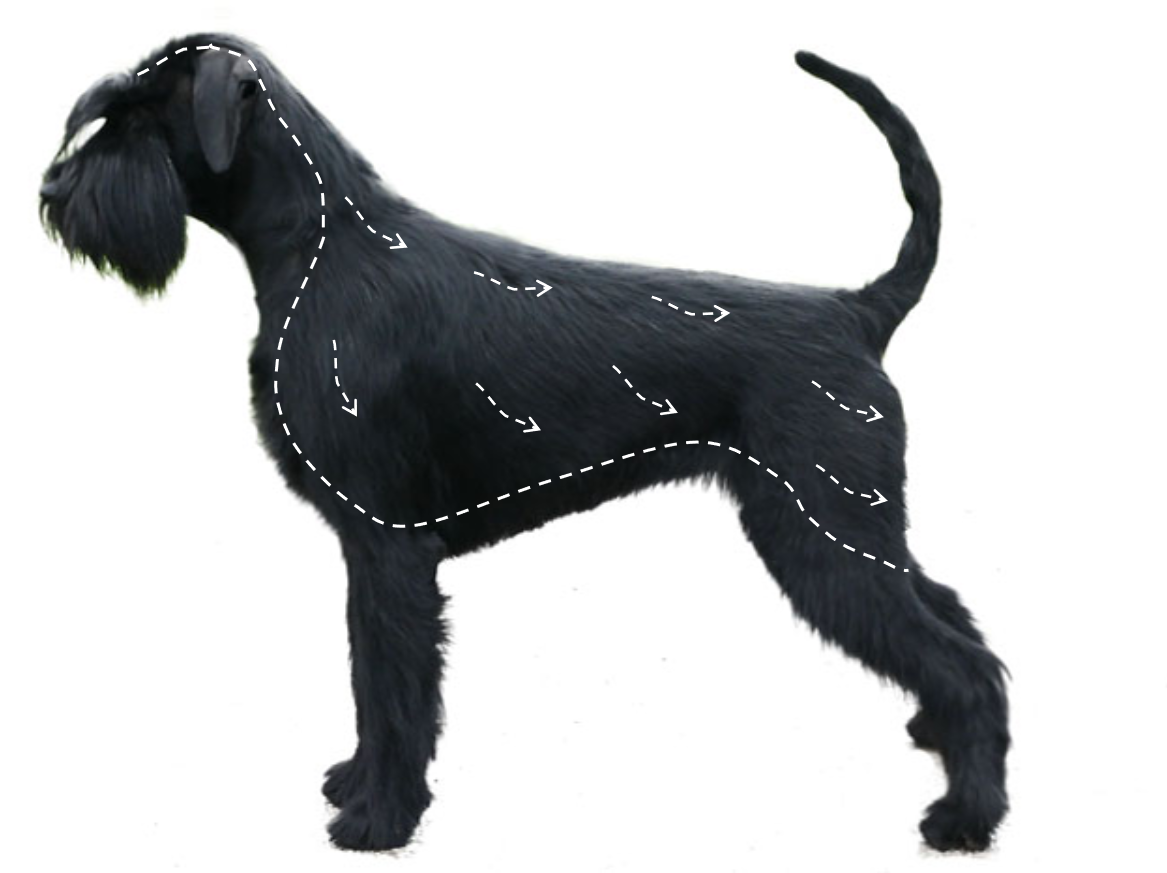 2. Using a coarse stripping knife, such as a blue Mikki knife, strip the coat within the dotted area, and in the direction the coat grows; start from the shoulders, going down the back and body, and also the top of the tail. If you prefer to clip your dog use blade No 7f within the same dotted area.
3. Finish off by stripping/clipping the back of the neck, and top of the head.
(N.B: Starting at the shoulders will encourage confidence in the dog before commencing the more intricate parts of the body.
Rear
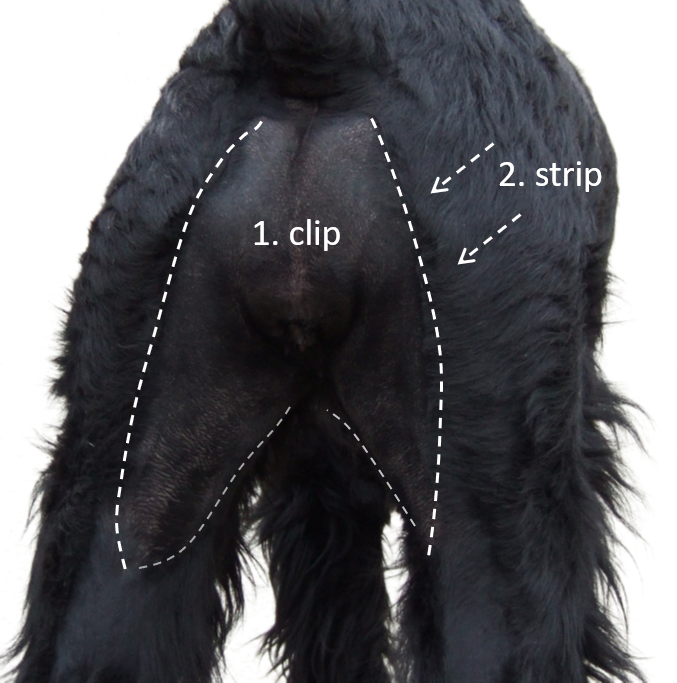 1. Using blade No 10 clip the rear and inner thigh inside the dotted lines, as shown, to accentuate the natural hairline running down the back of the leg. N.B: Before clipping check the density of the hair in this area as a longer blade may be preferred.
2. Using the stripping knife (or clipper blade No 7f) strip the outer thighs, same as the body coat, up to the dotted line, and blend in.
3. Continue clipping the abdomen up to the naval as shown with No 10 blade.
Head
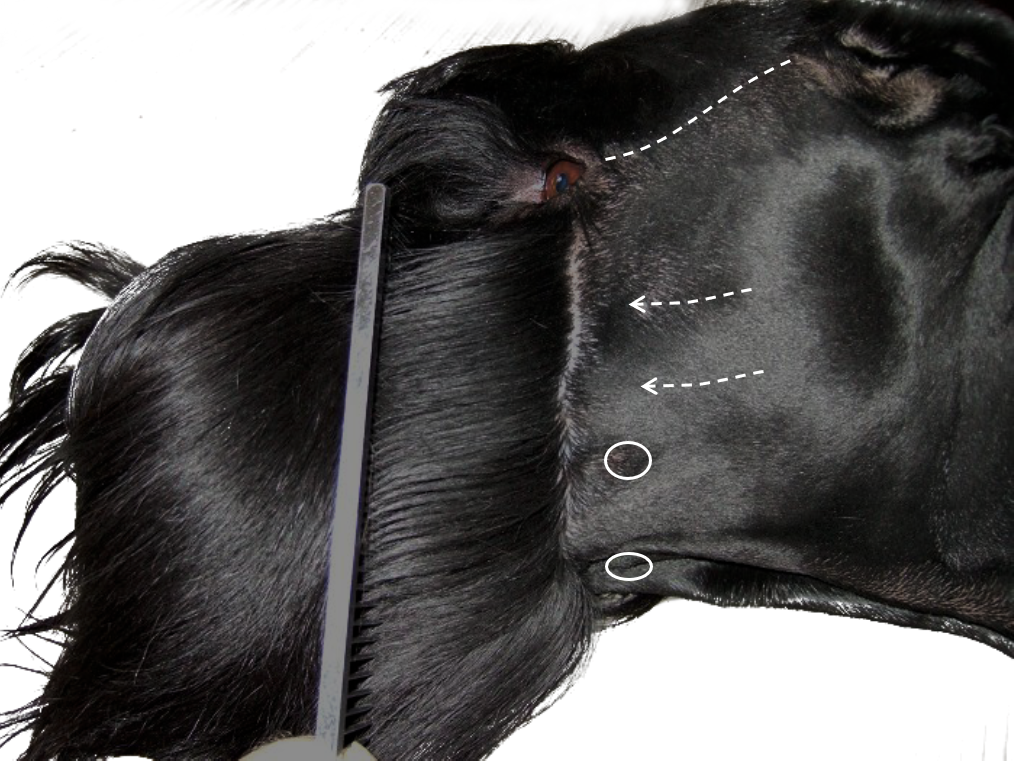
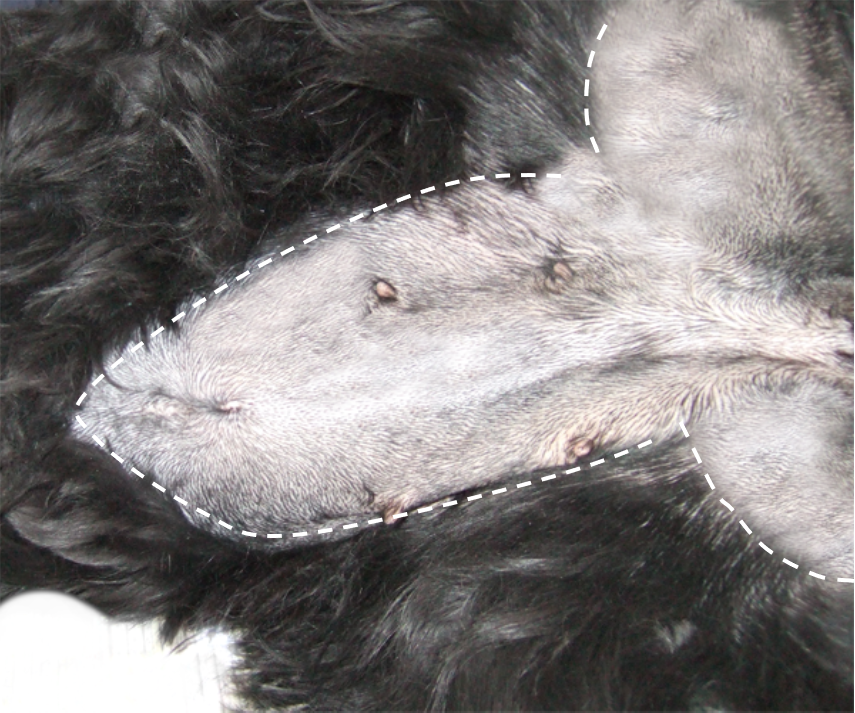
1. Using the large nodular whiskers (identified by circles) as a guide, brush the beard away from the face. Clip with blade No10 up to the beard line and to the ridge of the skull shown by the dotted line.
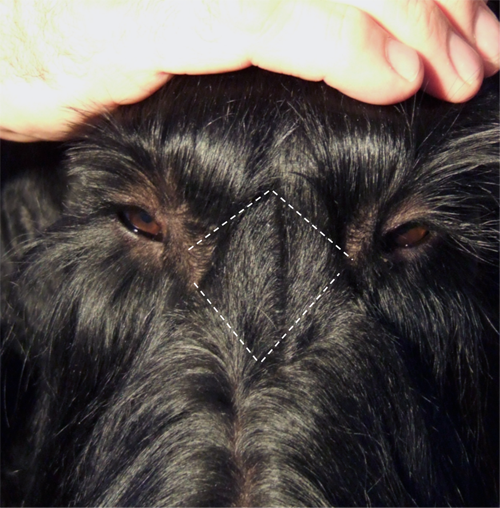
2. The hair between the eyes should form a natural inverted’ V’. Clean a small area out between the eyes with the clippers or thinning scissors (keep scissors ‘flat’ to the skull and this will prevent any obvious scissor marks).
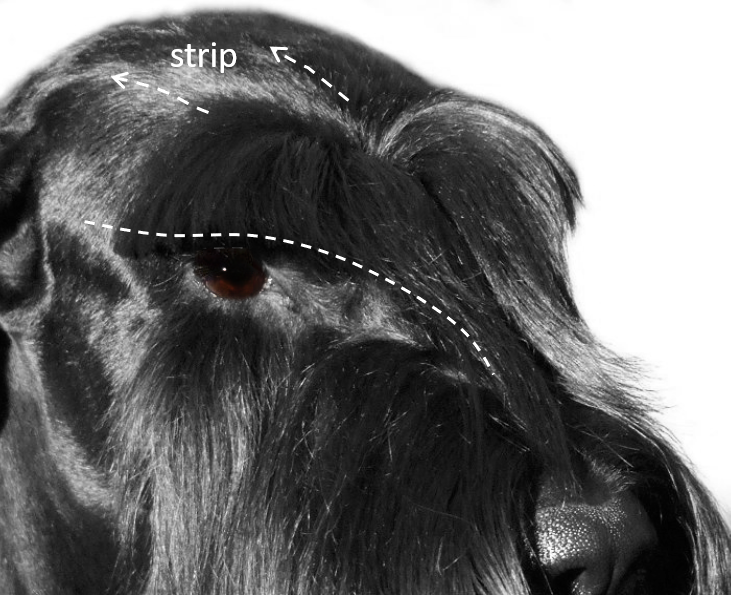
3. Trim the eyebrows in a line from the corner of the eye towards the nose.
4. Strip the top of the head, or clip if the body coat is clipped with blade 7f.
Neck
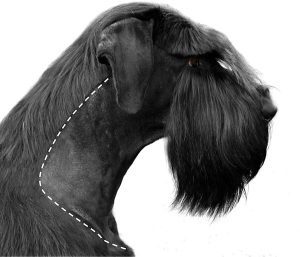 Clip the neck and throat down to the breast bone, with blade No10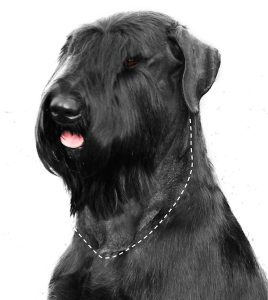
Chest
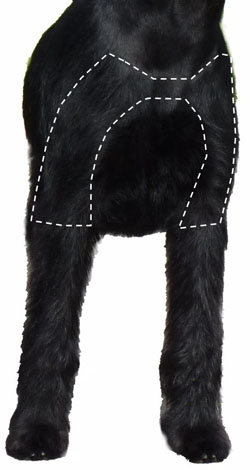 1. Strip down from the breast bone, down the upper arms, the same as the body coat, within the dotted lines shown. If the body coat is clipped, clip the same area with 7F blade.
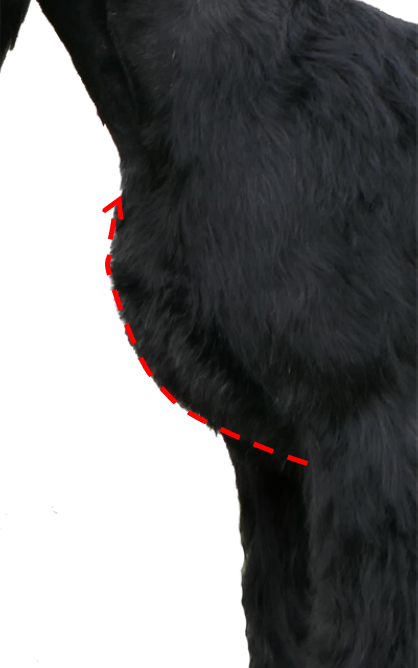 2. Brush hair away from the chest and scissor upwards from beneath the dog to achieve a neat line.
Ears
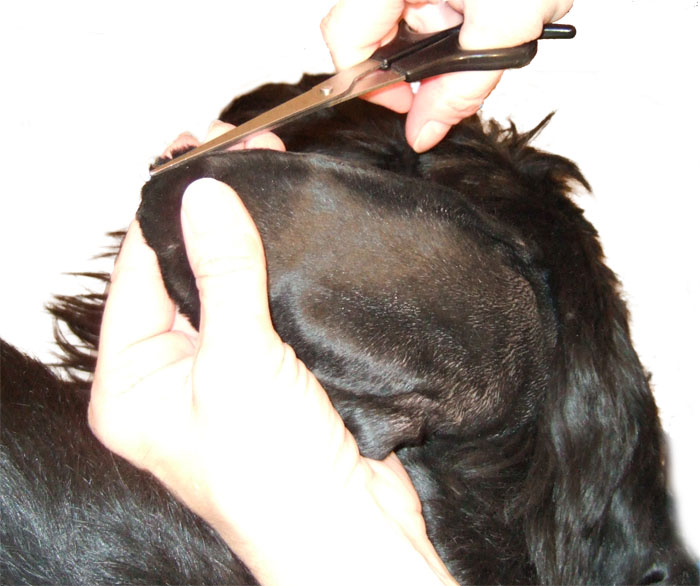 1. Clip the ears with blade No10. Clipping from the ear tip to towards the base gives a shorter neater finish.
2. Trim the edges of the ear with scissors to give a neat edge.
Feet
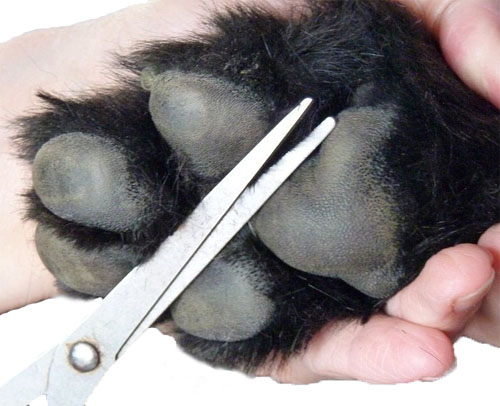 1. Trim fur in-between pads, this will prevent clogs of dirt and mats from causing sore feet.
2. With the dog standing, tidy the hair around each paw to create a round ‘Cats Paw’ effect.